As we enter the traditional "dog days" of summer, the world of labor and employment law remains active. Here are are some highlights of important and interesting news this week:
1. Furloughs
 Although there is some indication the recession is easing, many employers remain concerned about the economy. Pay reductions and temporary furloughs provide a means by which employers can manage payroll expense while still retaining valued employees. As we discussed in this post a couple of months ago, however, it is important to plan ahead and understand how the wage and hour laws impact your ability to use furloughs with certain types of employees. To help employers comply with the wage and hours laws as they relate to furloughs, the Department of Labor Wage and Hour Division recently issued a memo containing many of the frequently asked questions posed to the Division. The memo is available on the DOL website, or can be accessed here.
Employers are urged to access the DOL memo or consult with counsel before implementing any kind of furlough program, particularly if it involves exempt employees.
(Hat tip: Florida Employment and Immigration Law Blog)
2. Other Wage and Hour Issues in the News
Speaking of wage and hour problems, the convenience store chain QuikTrip, which has a substantial presence in Iowa, recently agreed to pay 3,800 employees approximately $750,000 in back pay. A Department of Labor Investigation revealed that the employees had not been paid an overtime premium that was due on certain performance related bonuses. QuikTrip blamed a computer glitch for the error. Details of the story can be found here.
Lesson: it might be wise to audit payroll systems from time to time to ensure your employee records and payroll systems are up to date and accurate.
3. Proposed EFCA Compromise Is Still Bad News for Employers
As a means of garnering the support of some reluctant Senators, promoters of EFCA have 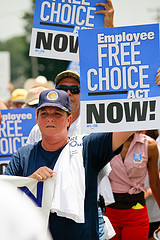 proposed removing the "card check" provision in law the law that would have permitted union certification without a secret ballot election. For a discussion of the current state of EFCA, including the recently proposed compromise, see Justin Wilson’s post here. However, even in its compromise form, EFCA is still a bad deal. Even though union interests may be willing to give up on card check, at least for now, they still are demanding the opportunity to hold an election in a shorter period of time after a petition is filed with the National Labor Relations Board than is currently available. That means employers will have less time to provide information to their employees in response to a union campaign. Moreover, the binding arbitration requirements of EFCA remain in the compromise legislation, which will provide an incentive for union negotiators not to compromise during the early phases of a negotiations, with the expectation an arbitrator will grant more union demands than would have been granted as part of a good faith negotiating.

 There is an interesting debate occurring in the legal blogosphere concerning
  are becoming a growing liability concern for employers. Offensive and inappropriate texts are increasingly being used as evidence in sexual harassment cases. According to the article, the main culprit is male bosses sending scandalous messages to female subordinates asking them on dates or making promises in return for sexual favors. What used to be a "he said she said" case can now be proved with electronic evidence.
 delinquent in keeping you up to date during the past couple of weeks. We apologize for the inactivity on the blog, as there have been many developments in the employment law world since our last posting at the end of June. The following is a brief summary of four of the more interesting and important current events:
 A recent study of Iowa employers revealed that 51 percent offered some type of health screening to their employees. Many companies also offer other "wellness" benefits to encourage employees to exercise and adopt healthy lifestyles. The wellness program of a prominent Des Moines employer was recently profiled in the Des Moines Register (
 Much ink has been spilled over the last week analyzing the background and record of Judge Sonia Sotomayor, the nominee to replace Justice David Souter on the United States Supreme Court. Given that the Supreme Court’s docket has included a large number of employment related cases in recent years, a record which is likely to continue given the